
Evaluation of the Disaster Mitigation and Adaptation Fund
Copyright
© His Majesty the King in Right of Canada, as represented by the Minister of Housing and Infrastructure, 2026.
Cat. No. T94-123/2026E-PDF
ISBN 978-0-660-99463-5
Table of contents
- Executive summary
- Program overview
- Program evolution
- Evaluation scope and questions
- Evaluation key findings
- Conclusion, recommendation and considerations
- Annex A: Logic Model and Performance Measurement Framework
- Annex B: Evaluation methodology
- Annex C: DMAF project distribution across Canada, selection criteria and success rates by stages
- Annex D: Case Study demonstrating the benefits and impacts of DMAF investments
- Annex E: Management’s response and Action Plan
Executive summary
This report presents the findings of Disaster Mitigation and Adaptation Fund (DMAF) evaluation, covering the period from 2018-19 to 2022-23. DMAF was launched in light of the increased frequency and costs of disaster events in Canada. The purpose of this evaluation was to assess DMAF’s relevance, effectiveness, and efficiency to support Program improvements. It examined how DMAF adapted to the short-term and longer-term needs of Canadian communities and how it contributed to Canadians’ quality of life. The evaluation also examined the Program’s design and implementation. Finally, it evaluated how well it met the expected short-term outcomes and the extent to which DMAF complemented other federal disaster mitigation and adaptation programs. The report’s overall goal was to provide evidence for program improvement to HICC senior management.
Key findings
The evaluation found that DMAF:
- Is a relevant and flexible Program to support Canadian communities become more resilient to natural disasters. These investments help reduce the negative impacts of disasters on the Canadian economy.
- Complements other federally funded disaster management and climate adaptation programs. To enhance the efficiency and long-term resilience of Canadian communities, there is a need to continue ongoing coordination and alignment of these programs given the increasing frequency, severity and costs of disasters in Canada.
- Was well designed and implemented to support the achievement of its expected immediate outcome. As infrastructure projects take time to complete, there is a need to review the Program’s Performance Measurement Strategy to ensure that intermediate and ultimate results, including related indicators and targets, remain relevant to assess progress and program long-term impacts, including economic benefits. Updated indicators should be Specific, Measurable, Achievable, Relevant and Time-Bound (SMART).
- DMAF’s primary objective is to fund mitigation infrastructure that strengthens community-level resilience, particularly in small, remote, and northern communities. While the program has incorporated government-wide priorities, such as GBA+ considerations, disasters do not affect all populations equally. This report highlights that data-informed approaches aimed at understanding and reducing vulnerabilities of at-risk populations can further enhance the long-term resilience of Canadian communities. For example, by lowering the project cost threshold to improve accessibility for communities with varying capacities and by providing full funding for Indigenous-led projects.
Conclusion
Overall, the evaluation concludes that DMAF had a positive return on investment and is relevant to supporting Canada's efforts to mitigate and adapt to the impacts of disasters and climate change. However, for DMAF to continue to be effective and to reduce the long-term impacts of disasters in Canada, there is a need to continue ongoing coordination and alignment with other federal disaster management programs, and for specific measures to support at-risk communities.
Recommendations
Considering DMAF was launched eight years ago, in light of the evolving context with increased frequency and costs of disaster events in Canada, it is recommended that the Program Management:
- Review the DMAF Performance Measurement Strategy to ensure that expected intermediate and ultimate results remain relevant to assess progress and long-term program impacts, including economic benefits as infrastructure projects take time to complete.
- Ensure that selected indicators follow the SMART criteria and that relevant targets are identified. This will allow for tracking and reporting on progress towards completion of funded projects.
Considerations
In addition to the recommendations, the evaluation team would like to highlight the following considerations :
- Ensure understanding and alignment with HICC's role in federal disaster mitigation and climate adaptation programing with other relevant federal
departments, and:- Align with and ensure complimentary with other federal disasters managementFootnote 1 programs to identify areas of need "gaps" for better coordination of project funding for long-term resilience of Canadian communities.
- to support programming like DMAF to focus on proactive disaster mitigation investments and climate adaptation measures to help reduce response and recovery costs and to leverage the long-term economic benefits of disaster mitigation.
- In collaboration with relevant stakeholders:
- Explore additional mechanisms to enhance involvement of provinces and territories (PTs) for projects with regional impacts requiring collaboration among different communities for long-term resilience.
- Better understand the needs of low-capacity communities and vulnerable populations as disasters do not impact people equally
Management’s response and action plan
The DMAF Management response to the recommendation, as well as the proposed Action Plan, are presented in Annex E.
Program overview
In 2018, the federal government launched the Disaster Mitigation and Adaptation Fund (DMAF) to address the increased frequency, severity and recovery costs of natural disasters affecting Canadian communities. The DMAF is a national, competitive and direct-delivery, merit-based contribution program that supports investments in natural and structural infrastructures to mitigate the impacts of disasters triggered by natural hazards.
During the program design phase, HICC engaged a large range of stakeholders, including provinces and territories and other government departments to include their perspectives to ensure that investments are relevant and targeted to needs.
To be eligible for funding considerations, projects must focus on mitigating the socio-economic, environmental, and cultural impacts of natural hazards and extreme weather events. Additionally, projects must comply with environmental assessment and Indigenous consultation requirements, while integrating a climate lens to ensure long-term sustainability and effectiveness in addressing future risks.
Submitted projects go through a competitive process and are assessed against eligibility, merit, and risk criteria based on information provided in the application package. In urgent and emergent situations, projects can be approved outside the competitive process, in alignment with a set of project selection criteria, to enable program responsiveness to the needs of the communities. The Minister of HICC or Treasury Board approves projects in accordance with their delegation of authority.
Key facts
- DMAF is aimed at strengthening Canadian communities’ resilienceFootnote 2 through investments in infrastructure to better withstand disaster risks such as floods, wildland fires, droughts, seismic events, and other natural disasters.
- Investments aim to prevent infrastructure failures that could threaten health, safety, essential services, economic activity, and lead to high recovery and replacement costs.
- Eligible applicants are municipalities, provinces, territories, Indigenous communities and organizations, as well as private and public for-profit and non-profit entities.
- Maximum federal contribution from all sources for approved projects is limited up to 50% for provinces, up to 40% for municipalities and non-profits in provinces, up to 75% for territories, up to 100% for Indigenous recipients, and up to 25% for for-profit private sector organizations.
Program evolution
In 2017, the federal budget allocated $2 billion over 10 years for large-scale infrastructure projects aimed at mitigating the impact of natural hazards and climate change with a minimum cost of $20 million; this initial program cycle was known as DMAF 1.0 and funded 69 projects.
Since its inception, the program has undergone significant evolution; including multiple top-up fundings to enable the program to be more responsive to Canadians’ needs. As part of DMAF renewal, Budget 2021 allocated $1.375 billion funding over 12 years, for reaching low-capacity communities:
- $670 million was allocated to small scale projects with total eligible costs between $1 million and $20 million.
- A minimum of 10% or $138 million, was earmarked for Indigenous recipients.
In 2022, an additional $489.1 million investment over 10 years was allocated to further support communities across Canada as part of the Government of Canada's Adaptation Action Plan released alongside the National Adaptation Strategy. In the first quarter of 2023, the terms and conditions were amended, which led to the removal of the small-scale stream to provide more flexible funding allocation.
Since 2023, the DMAF has been delivering a one stream program, open to projects with total eligible costs of $1 million and above. This cycle is known as, DMAF 2.0. where a total of $3.74 billion in targeted investments were committed with payments being made over the next 12 years (ending 2032-33). At the time of this evaluation, there was only one (1) project completed, York Durham Sewage System Forcemain Twinning Project, out of the 114 projects approved for funding.

-
Text description
This figure illustrates the DMAF application process for two program cycles.
DMAF 1.0 ($20M+ projects) had a two-step application process:
Applicants submitted an expression of interest and program conducted an eligibility determination; Eligible applicants were invited to submit a full application.
DMAF 2.0 ($1-20M and $20M+) used a one-step application process:
Applicants submitted a single application containing all information required to assess eligibility, merit and risk criteria. There was no interim contact with applicants during this cycle.
The DMAF program has undergone pivoting and refinement of strategies including the selection process flow to meet the needs of the program based on feedback about the program design. This evolution has been characterized by the introduction of specialized small-scale project streams, financial top-ups, a series of application intake rounds, and meticulous project approval processes, all of which contributed to the program renewal. Figure 2 below presents the trajectory of the program's evolution and corresponding timelines.

-
Text description
DMAF 1.0:
- April 2017: Budget 2017 announces $2B DMAF program.
- May 2018: Program launched and 1st intake initiated with large-scale projects (DMAF 1.0).
- July 2018: 1st official intake: Deadline to submit the Expression of Interest (EOI).
- January 2019: 1st official intake: Deadline to submit the Full application for those invited following EOI review.
- Spring 2019: 1st intake (DMAF 1.0) project approvals
- April 2019: Special Intake - (Spring 2019 flooding) - Outside of the competitive process – EOI and Full application combined.
- Summer/Fall 2019: Special intake deadline and approvals.
- May 2020: 2020 targeted intake for projects deferred under 1st DMAF 1.0 intake initiated.
- July 2020: 2020 targeted intake application deadline.
- Fall 2020: 2020 targeted intake project approvals.
DMAF 2.0:
- April 2021: DMAF received additional funding of $1.375B through Budget 2021.
- July 2021: 1st intake of DMAF 2.0 (called Fall 2021 intake) initiated (with the new Small-Scale Projects Stream).
- October 2021: 1st intake of DMAF 2.0 Large-scale project stream application closed.
- November 2021: 1st intake of DMAF 2.0 Small-scale project stream application closed.
- Summer 2022: Fall 2021 intake (DMAF 2.0) project approvals.
- November 2022: A top up of $489.1M was received through GOCAAP. Approval of single project stream for projects above $1M in total eligible costs received.
- January 2023: The second intake of DMAF 2.0 (called Summer 2023 intake) initiated.
March 2023: Evaluation scope ends here.
- July 2023: Summer 2023 intake application deadline.
- December 2032: Expected completion date for the approved DMAF projects
Evaluation scope and questions
Scope
This evaluation was conducted to fulfill the requirements of the
Financial Administration Act (FAA) and was planned in HICC's departmental 2023-2028 Integrated Audit and Evaluation Plan. The purpose of this evaluation is to assess DMAF relevance, effectiveness, and efficiency to support program improvements.
The evaluation covered the DMAF activities from May 2018 to March 2023. This formative evaluation was the program’s first formal evaluation since its inception and focuses on the program’s design and implementation. DMAF projects are expected to be completed by 2032 as infrastructure projects require time to complete. Taking this into account, the evaluation focused on the progress made toward achieving the program’s immediate outcome. The evaluation also focused on the extent to which the program’s investments addressed the vulnerabilities and contributed to building the resilience of at-risk communities against the impacts of natural hazards.
The evaluation also considered program specific factors:
- Given that some of the projects are long-term (8-10 years) and most of the projects are in various phases of planning and implementation, or a stage of negotiation for the contribution agreements, the evaluation did not assess the extent to which the program’s long-term outcomes have been realized.
- Given that multiple federal departments implement components of the disaster management cycle with potential overlaps, this evaluation assessed for overlaps and/or complementarity between the DMAF and these programs for efficiency.
- The DMAF is a disaster mitigation and adaptation program and not an emergency response program; this was considered in relation to other federal disaster programs.
Questions
The evaluation addressed questions related to four areas of interest: relevance, effectiveness, efficiency and gender-based analysis. The evaluation questions were:
- To what extent does the DMAF adapt to the current and future needs of communities and contribute to the quality of life of Canadians? (Relevance)
- To what extent does the DMAF program complement or overlap with other federal disaster mitigation and adaptation initiatives? (Efficiency)
- To what extent does the DMAF program design and implementation support the achievement of the expected immediate outcome (Effectiveness)
- To what extent does the DMAF Program design and implementation incorporate Indigenous and GBA+ considerations? (GBA Plus)
Evaluation key findings
Key finding 1: The DMAF is a relevant and flexible program that funds disaster mitigation and adaptation infrastructure projects to support Canadian communities becoming more resilient to natural disasters. These investments help reduce negative impacts of disasters on the Canadian economy.
Sub findings
- 1.1 The DMAF supports proactive infrastructure projects that help mitigate the impact, and reduce recovery costs, of disasters triggered by natural hazards in Canadian communities. This approach is aligned with nationalFootnote 3 and internationalFootnote 4 best practices.
- 1.2 Proactive mitigation and adaptation investments help reduce the economic impacts of disasters in Canada.
- 1.3 The DMAF design and implementation included flexible strategies to facilitate accessibility and participation for all types and sizes of Canadian communities. Additional opportunities for improvement have been identified.
Why is it important?
- According to the Canadian Disaster Database, 345 meteorological or hydrological disasters occurred between 2000 and 2023 with an estimated cost of hundreds of billions of dollars and hundreds of thousands of people displaced. This is amplified by current climate change issues.
- The Insurance Institute of Canada estimated, in its 2020 report, that severe weather claims could double from $2.1 billion to $5 billion in the 2020-2030 decade.
- The Sendai Framework for Disaster Risk Reduction states that proactive investments in disaster mitigation and climate change adaptation yields return on investment (ROI) between $4.6 to $10 for every dollar spent. Investments help reduce the economic impacts of natural disasters.
- The Bank of Canada reports that natural disasters contribute to increased volatility in economic activity and prices, making it difficult to assess underlying economic trends.
- The Federal Government launched the DMAF in 2018 to fund disaster mitigation projects in at-risk communities through a merit-based application process. Since its inception, 114 disaster mitigation projects have been approved, totaling $2.74 billion in funding. The DMAF also incorporated flexible strategies, allowing communities to prioritize disaster mitigation projects based on their needs.

Source: The Canadian Disaster Database.
-
Text description
This chart illustrates the upward trajectory in the number of disasters recorded in Canada per decade between 1950 and 2019.
- 1950 – 1959: 20 disasters
- 1960 – 1969: 37 disasters
- 1970 – 1979: 76 disasters
- 1980 – 1989: 92 disasters
- 1990 – 1999: 131 disasters
- 2000 – 2009: 138 disasters
- 2010 – 2019: 149 disasters.
Sub-Finding 1.1: The DMAF supports proactive infrastructure projects that helps mitigate the impact and reduce recovery costs of disasters triggered by natural hazards in Canadian communities. This approach is aligned with national and international best practices.
Evidence from the case study conducted as part of this evaluation, showed that the estimated return on investment (ROI) for select approved projects ranged from $4.67 to $19.65 for every dollar invested. These estimates align with nationalFootnote 3 and globalFootnote 4 ROI benchmarks for proactive investments in disaster mitigation and climate change adaptation projects, which are up to $10 and $15 for every dollar spent, respectively. This underscores the DMAF program’s potential to help reverse the negative impacts of disasters on overall economic growth.
Recipients assessed as part of the case study estimated, in their submission, a 32% to 85% increase in resilience upon completion for their communities.
Interviewees, including funded recipients and P/T representatives, emphasized that proactive investments in these infrastructures are cost-effective. They lead to long-term benefits, operational efficiencies, and reduced recovery costs compared to emergency operations, which are significantly more expensive
As shown in Figure 4, the evaluation revealed that DMAF projects align geographically with areas previously affected by disasters. It also revealed the need for ongoing investments in disaster mitigation to support the needs of at-risk communities and increase the resilience of Canadian communities.
Additionally, continuing to enhance collaboration with P/T stakeholders would help facilitate better alignment with the recommendation for stakeholder involvement. This need was noted by the P/T stakeholders interviewed.

Sub Finding 1.2: Proactive mitigation and adaptation investments reduce the economic impacts of disasters in Canada.
Natural disasters have significant impacts on the Canadian economy which have been rising steadily over the past decade. According to the Intact Center for Climate Adaptation (ICCA), catastrophic insured losses due to extreme weather ranged from $250-450 million per year between 1983 to 2008 and have increased to approximately $2 billion per year between 2009 to 2022.
The four largest natural disasters in Canadian history had insurance costs in the billions: $4.5 billion for the 2016 Fort McMurray Forest fires, $2.7 billion for the 2024 remnants of Hurricane Debby in the Quebec region, $2 billion for the 2013 Southern Alberta floods and $1.3 billion for the 2020 Alberta Hailstorm. Recently, in 2024, the Toronto floods and Jasper Fires caused an estimated $990 million and $880 million in insurable damages, respectively.
The Bank of Canada has highlighted that natural disasters contribute to increased volatility in economic activity and prices, making it difficult to assess underlying economic trends. Other economic consequences after a disaster include an increase in the unemployment rate and a decrease in the number of hours worked, reducing the ability of impacted areas to contribute to the Canadian economy.
The Canadian Climate Institute indicated that climate change is exacerbating these trends by contributing to the increase in the frequency and intensity of natural disasters in Canada. Precisely, it was highlighted that the combined costs of disasters could reduce Canada’s Gross Domestic Product (GDP) by 0.8% by 2050. This aligns with a recent report from the Bank of Canada that indicated Federal aid could soften the negative impacts of disasters on Canada’s GDP.
The Institute also noted that the rising costs of climate change causes severe damage to the Canadian economy, particularly to individual households, and constitute a macroeconomic risk that threatens the prosperity of Canadians. Under the high-emissions scenario, climate change will lead to a projected loss of 128 million hours worked annually by the end of the century. This is the equivalent of 62,000 full-time workers, representing lost productivity of $14.8 billion annually.
Natural disasters can reduce tax revenues and affect communities with the destruction of infrastructure and public assets, which create opportunity costs as investments are directed towards recovery rather than economic growth.
Disasters impact not only the overall economy but also directly affect Canadians homeowners with their home often being their largest asset. According to an ICCA study, property values in disaster-affected areas dropped by 8% compared to unaffected regions. Additionally, home insurance costs rose by 7.8% year-over-year in those areas.
Natural disasters affect economic activity, productivity, income and Canadians’ prosperity. With the increase in frequency, severity and recovery costs of natural disasters, there is a continued need for DMAF proactive mitigation investments in Canadians’ ageing infrastructure to reduce the impacts of natural disasters and foster a more resilient economy.
Sub Finding 1.3: The DMAF design and implementation included flexible strategies to facilitate accessibility and participation for all types and sizes of Canadian communities. Additional opportunities for improvement have been identified.
Flexibility Strategies
- Implementation of all-hazards type and direct delivery approaches allowed for the development of disaster mitigation projects that can address multiple natural disasters while building trust with the federal government. It also facilitated community empowerment and ownership of measures to address climate change challenges. These allowed for increased efficiency and sustainability of disaster management plans.
- Lowering the minimum project cost threshold from $20M to $1M between DMAF 1.0 and DMAF 2.0 facilitated smaller and lower-capacity communities ability to access funding. This shift was informed by feedback from the applicants.
- Allocation of a minimum of 10% of funding and increasing the federal cost share from 75% to 100% for Indigenous communities facilitated inclusivity and accessibility to DMAF funding. As a result, the percentage of Indigenous recipients increased from 4.4% (3 of 69 projects) to 20% (9 of 45 projects). Additionally, total program contributions for Indigenous communities increased from $99,342,336 (69%) to $143,548,326 (100%) in alignment with the program's intent.
- DMAF allowed, in exceptional circumstances, limited project rescoping based on the program’s fund availability and its terms and conditions, to accommodate changes in the feasibility plan and cost escalation. This flexibility component ensured that disaster mitigation projects considered realities that impact implementation, particularly in the context of the COVID-19 Pandemic.
- Calls for proposals were initiated outside of the regular intake process to support responsiveness to the emerging needs of Canadian communities-at-risk. This was demonstrated following the 2019-2020 flooding.
The DMAF design and implementation was flexible and supported communities to address their disaster mitigation needs as required by the Treasury Board (TB) Policy on Transfer Payments. However, there are areas for improvement.
Applicants found the application requirements, particularly the merit criteria, burdensome to address in addition to redundancies and duplications.
Additionally, those from small, medium, or rural communities noted the federal-share and stacking limits were significantly limiting due to their inability to access matching funding. It created barriers to accessing the program and contributed to approval bottlenecks, thereby leading to delays. This was in addition to the time needed for the federal review. The technical nature of the projects required significant due diligence and an involved approval process for successful applicants.
In concert, these delays impacted the stability of project costs leading to cost escalations and potential project rescoping.
Key Finding 2 : DMAF complements other federally funded disaster management and climate adaptation programs. To enhance efficiency and long-term resilience of Canadian communities, there is need to continue ongoing coordination and alignment of these programs given the increasing frequency, severity and costs of disasters in Canada.
Sub findings
- 2.1 DMAF is uniquely designed to invest in a wide range of proactive mitigation measures for ‘all types’ of natural hazards across Canada and complements other governments’ disaster management initiatives.
- 2.2 Despite efforts to build complementarity, DMAF would benefit from strengthened coordination and collaboration amongst other government departments (OGDs) and stakeholders to improve effectiveness and efficiency.
Why is it important?
- The DMAF is unique among federal programs for its proactive all-hazards approach to disaster mitigation, funding both small- and large-scale infrastructure projects before disasters occur to reduce vulnerabilities, response, and recovery costs, as well as socio-economic impacts. As stated in The Federal Emergency Management Strategy intitled Toward a Resilient 2030, DMAF’s investments in mitigation can help significantly reduce the impacts when a disaster occurs.
- The DMAF complements other federal disaster management programs, such as Public Safety’s Disaster Financial Assistance Arrangements (DFAA), National Disaster Mitigation Program (NDMP)Footnote 5, and Indigenous Service Canada’s Emergency Management Assistance Program (EMAP), including other HICC’s similar programs, by funding all scale of proactive mitigation measures while these programs focus on post-event measures or smaller-scale projects. In fact, greater DMAF Investments should reduce the impacts of disasters and the associated recovery costs under the DFAA.
- Stakeholders emphasized the importance and relevance of the DMAF in meeting ongoing disaster mitigation needs, highlighting the necessity for increased coordination and collaboration to improve efficiency and support to communities by mitigating disasters such as flooding that goes beyond defined geographical locations.
- Both the DMAF 1.0 and 2.0 intakes have demonstrated an increased demand for DMAF funding by 15% while approved projects decreased by 33%. In the context of increased frequency and severity of recovery costs of disasters affecting Canadian communities, increased support and tailored approaches are required to leverage the efficiency of proactive mitigation investments.
Sub Finding 2.1: DMAF is uniquely designed to invest in a wide range of proactive mitigation measures for ‘all types’ of natural hazards across Canada and complements other governments disaster management initiatives.
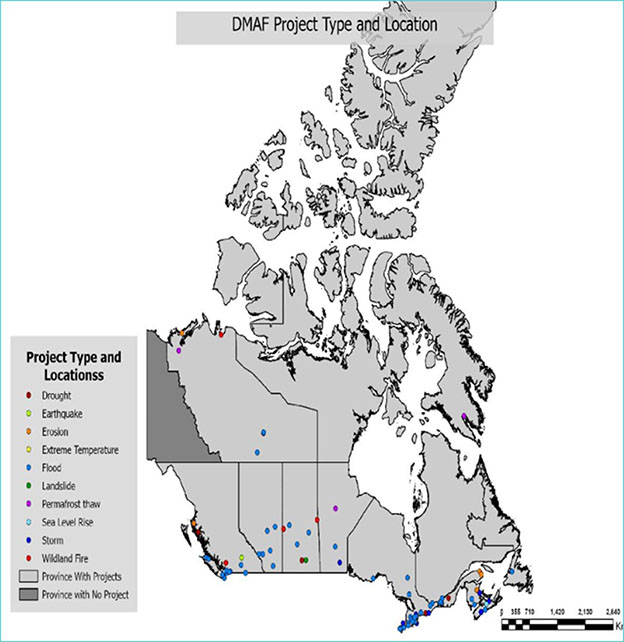
-
Text description
This figure illustrates the expansion of DMAF across Canada, with investments addressing approximately 10 hazard types and reaching Canadian communities in 11 of the 13 P/Ts.
As shown in the map, DMAF has invested in about 10 different types of hazards, so far - spreads across Canadian communities in 11 of the 13 P/Ts.
While there are multiple federally funded disaster management programs, the DMAF is differentiated by its unique design to invest in a wide range (large- & small-scale) of proactive infrastructure mitigation measures for all types of natural-hazards. It complements other government efforts in alignment with global and national recommended best practices to develop and implement programs that are supportive and complementary towards building efficiency and sustainable impact.
For example, while both DMAF and NDMPFootnote 6 address rising flood risks:
- NDMP funded risk assessments and mitigation planning including non-structural and small-scale structural projects for P/Ts, and
- DMAF is funding infrastructure of different scales and for multiple different eligible applicants rather than only focusing on P/TS.
In addition, NDMP funded flood risk assessments and mapping activities which are foundational to disaster mitigation planning that communities need to perform before seeking DMAF investments.
Furthermore, DMAF funds proactive mitigation projects ‘before’ a disaster occurs and complements the DFAA which funds mitigation enhancement projects ‘after’ a disaster in has impacted communities.
Internal HICC program stakeholders implementing similar programs such as Canada Community-Building Fund (CCBF) and Investing in Canada Infrastructure Program’s (ICIP) Green stream subcomponent, explained that while there are overlaps in the overall goals across all programs, there are collaborative efforts that help delineate programming.
DMAF, in recognition of the need for synergy across related programs, integrated opportunities for communication and collaboration across departments. This included very high-level meetings between Public Safety Canada and HICC, such as biweekly meetings at the director level and monthly meetings at the senior management level.
At the P/T level, DMAF was also found to complement efforts to address disaster mitigation and climate change issues impacting Canada's communities and economy. Stakeholders interviewed noted that it contributes to building community resilience with suggestions for improvement.
Sub Findings 2.2 : Despite efforts to build complementarity, DMAF will benefit from strengthened coordination and collaboration among other government departments and stakeholders to improve effectiveness and efficiency.
Collaboration among other government departments (OGDs), P/Ts, and partners -such as municipalities, communities, non-governmental organizations, the private sector and Indigenous communities on emergency and disaster management - is guided by the Emergency Management Framework which recommends the ‘whole-of-society’ approach to disaster management.

-
Text description
The figure shows how federally funded programs align across the Disaster Management Cycle (Preparedness, Response, Recovery, and Mitigation and Adaptation) highlighting areas of complementarity where programs reinforce one another and areas of potential overlap where programs mandates may intersect. The figure also indicates each phase of the Disaster Management Cycle related federal programs (NDMP and EMMP in Preparedness; DFAA and EMMP in Response and Recovery; and DMAF, NDMP, DFAA, and EMMP in Mitigation and Adaptation.
Based on documents reviewed, major federally funded programs supporting different components of the emergency management cycle are all interconnected. This highlights the need for strong coordination and collaboration.
Program officials stated that there exists clarity of roles, responsibilities and mutual understanding, between federal departments. However, there is some overlap in DMAF’s process for sharing information about projects and post assessments with OGDs for feedback. This is in addition to bilateral dialogues between OGDs particularly Public Safety Canada for review of program plans.
Evidence from this evaluation indicates that, while the program has made efforts to build complementarity, there are still overlaps between the overall goal of DMAF and other major disaster management programs. Stakeholders from P/Ts suggested the need to provide clarity on how project eligibility is delineated across the various federally funded programs.
Interviewees from OGDs noted the need to develop a system for more structured collaboration and coordination across departments at the working level for efficiency. Specifically, institutionalizing routine working group interactions would help build a better understanding of each program, facilitate informed referrals to appropriate programs and, importantly, build synergistic relationships that would be more impactful for disaster mitigation and adaptation.
Clearer guidelines, improved collaboration, and better strategic alignment of efforts across all levels of government, Indigenous partners and other stakeholders were indicated as crucial - particularly given the increased frequency and impacts of disasters across Canada.
Overall, enhancing these complementary relationships will support program efficiencies. For example, investments through DMAF will help reduce disaster response and recovery costs under DFAA.
Key Finding 3 : DMAF design and implementation support the achievement of its expected immediate outcome. As infrastructure projects take time to complete, there is a need to review the Performance Measurement Strategy to ensure that intermediate and ultimate results, including related indicators and targets, remain relevant to assess progress and program long term impacts, including economic benefits. Updated indicators should follow the SMART criteria.
Sub findings
- 3.1 DMAF projects are making progress towards their implementation and are effective in supporting communities to reduce vulnerabilities to the impacts of disasters.
- 3.2 While some aspects of the merit-based program design facilitated accessibility and effectiveness, there are some design components that requires further improvement to increase the program’s effectiveness.
- 3.3 Although efforts made to support smaller-scale projects were positive, some applicants found it difficult to provide the data required to meet the merit and risk criteria requirements, suggesting the need for targeted support.
- 3.4 : There is a need to review the DMAF Performance Measurement Strategy, to collect and analyze the program performance information and to report on intermediate and long-term outcomes.
Why is it important?
- To evaluate the achievement of the program’s immediate outcomeFootnote 7, 20 projects were assessed. The case study showed these projects are making progress in the construction and are on track for completion. This is expected to increase communities’ resilience if exposed to hazards.
- Factors such as community-led program design, all-hazards approach, lowering the funding threshold from $20M to $1M to support all-sized communities, increased cost-sharing provision for Indigenous recipients, and ongoing communication and guidance provided to applicants made the program more accessible and helped achieve immediate outcome (effectiveness). These factors should be considered for subsequent disaster mitigation programs.
- Stakeholders, including applicants, suggested some considerations for further improvement of DMAF design components to increase accessibility to enhance even further the transparency and effectiveness of the program. These include increased flexibility in interpreting assessment criteria to improve the equity of the selection process and funding allocation to support diverse communities with varying capacity and conditions, including more flexibilities in the application process and even more collaboration with all stakeholders such as P/Ts.
- Infrastructure projects, by nature, require time to complete and often take longer than expected. To ensure that DMAF funded projects achieve their expected medium and long-term outcomes, there is a need to review the program performance measurement strategy.
Sub Finding 3.1: DMAF projects are making progress towards their implementation and are effective in supporting communities to reduce vulnerabilities to the impacts of disasters.
According to the Sendai Framework for Disaster Risk Reduction, a disaster occurs when a hazardous event (by severity or frequency) interacts with conditions of vulnerabilities in a community. This aligns with the DMAF’s theory of change based on the assumption that completion of DMAF projects would address vulnerabilities, contribute to building community resilience and reduce the social and economic impacts before disasters occur.
Large infrastructure projects require years to implement due to extensive planning, coordination, resource allocation, complex engineering challenges to address, regulatory approvals, and potential environmental impacts. Therefore, at the time of this evaluation, only 1 of the 114 DMAF projects approved for funding (York Durham Sewage System Forcemain Twinning Project) had been completed.
Evidence from the evaluation showed that DMAF funded projects are making progress towards increasing the structural and natural capacity of communities to adapt to climate change impacts triggered by natural hazards and extreme weather events. This is based on the review of 20 select projects (20) under the case study and responses from the various interviewees, including program officials and P/T representatives . Seventeen participants from the selected funded projects show that 13 are on track, while 2 face delays due to project complexity, bottlenecks with approval processes, and budget constraints.
Despite the challenges faced, funded recipients share the opinion that the program’s reporting requirements are relevant and sufficient for documenting progress. They are confident that the projects will help their communities mitigate the impact of disasters due to climate change should a disaster occurs.
At the time of this evaluation, it was expected that all approved projects would be completed by 2032.
Sub Finding 3.2: While some aspects of the merit-based program design facilitated accessibility and effectiveness, there are some design components that requires further improvement to increase the program’s effectiveness.
A few stakeholders commended the DMAF’s merit-based program design’s ability to deliver funding to project proponents. They explained that, while there are alternative funding models such as allocation-based, the merit- based funding model provided an opportunity for smaller entities to secure funding for larger projects because it was based on need and not size of the community. However, the fixed-period for applications (limited duration), ambiguous evaluation criteria, the long lead time for approval and the "national" one-size-fits-all model impacted equitable accessibility to and the flexibility of the program.
Many stakeholders remarked that the set of criteria used for assessment were ambiguous and unclear to applicants. They indicated that this impacted the program’s transparency and trust perception.
There were also concerns about the diverse interpretation of the criteria by applicants. This made the assessment more challenging and suggested the need to simplify and better communicate the selection criteria to applicants.
The evaluation found that lower-capacity applicants, such as those with limited financial capacity, technical know-how, or previous experience with federal programs were most impacted by the selection model. This confirms a 2020 Internal Audit of DMAF that found, while project assessments were fair, small municipalities, not-for-profits and Indigenous communities (categories which include many lower-capacity applicants) had a higher proportion of projects deemed ineligible.
There was the general perception that the merit-based criteria was more favourable to applicants that had the capacity and experience to prepare well- written communication that outlined the need and ROI of their proposed projects regardless of whether their communities were most at-risk. Stakeholders recommended that, moving forward, HICC makes more effort to understand the needs of various populations through vulnerability maps and to use better data to guide funding decision-making.
Sub Finding 3.3: Although efforts made to support smaller-scale projects were positive, some applicants found it difficult to provide the data required to meet the merit and risk criteria requirements, suggesting the need for targeted support.
DMAF 2.0 sought to encourage the proposal of smaller-scale projects, reflecting recommendations from earlier program review and audit. Of the 214 applications submitted, 153 (71%) were for small-scale projects.
To ensure applicants can deliver their projects, DMAF 2.0 increased focus on project risk management. Applications were first evaluated for eligibility, following which eligible projects were assessed against merit and risk criteria. Multiple scenarios presenting meritorious projects were recommended for the Minister’s approval (See Annex C).
An analysis of the continuum from project application to final approval showed that of the 83 small-scale projects (54%) and 42 large-scale projects (69%) eligible applications, only 35 small-scale projects (23%) and 13 large-scale projects (21%) met the merit and risk criteria and were presented for approval. The success rate was impacted by the merit and risk criteria requirements which require complex data such as cost-benefit analysis and ROI. Interviewees, especially those from lower-capacity communities, emphasized that these criteria were overly challenging, highlighting the barriers they posed.
The complexity of the data requirements was further compounded by the fixed intake period, which some stakeholders indicated did not provide sufficient time to develop a robust justification for identified disaster mitigation projects. Stakeholders said that development of these project proposals require significant time, resources, and flexibility to adapt plans in a changing environment.
This suggests the need for DMAF to consider offering additional support to lower-capacity communities, enabling them to collect relevant data and effectively demonstrate the potential efficiency and impact of their proposed disaster mitigation and adaptation projects. Interviewed stakeholders specifically recommended allocating dedicated funds to hire technical experts who can assist with the application process.
Sub-Finding 3.4: There is a need to review the DMAF Performance Measurement Strategy, to collect and analyze the program performance information and to report on intermediate and long-term outcomes.
Based on the DMAF logic model and performance measurement strategy, the program’s medium and long-term outcomes are to increase Canadian communities’ ability to adapt and withstand disasters triggered by natural hazards; to increase economic, environmental and social resilience and to ensure that infrastructure is managed respectively in a more sustainable way.
Infrastructure projects require time to complete and often take longer than expected for reasons such as supply chain issues, increased building material costs, and labour shortage. At the time of this evaluation, only one project had been completed with most expected to be finalised by 2032.
To ensure the DMAF program is set to report on its intermediate and long-term outcomes, an analysis of the program’s Performance Measurement Strategy was performed. Evidence from the analysis suggested the need to review the program Performance Measurement Strategy regularly to ensure that intermediate and ultimate results, including related indicators and targets, remain relevant. Otherwise, HICC’s ability to assess progress and the program’s long-term impacts, including economic benefits could be ineffective.
A future iteration of the DMAF Performance Measurement Strategy should include SMARTFootnote 8 indicators to assess the multiple potential impacts of DMAF-funded projects as stated in the intermediate and long-term outcomes, and the key progress points where data will be collected and reported in advance of project completion. To do so, a mechanism to collect and analyze performance data to report on progress towards achieving all levels of expected results is required. This will support informed decision-making and enable future audit and evaluation of the DMAF program, in particular, the next summative evaluation of the program.
Key Finding 4: DMAF’s primary objective is to fund mitigation infrastructure that strengthens community-level resilience, particularly in small, remote, and northern communities. The program has incorporated government-wide priorities, such as GBA+ considerations, (by lowering the project cost threshold to improve accessibility for communities with varying capacities and by providing full funding for Indigenous-led projects). However, disasters do not impact people equally. The evaluation revealed that data-informed approaches aimed at understanding and reducing vulnerabilities of at-risk populations could help enhance the long-term resilience of Canadian communities.
Sub findings
- 4.1 Although the DMAF was established before the institution of the Quality of Life (QoL) Framework for Canada, the program contributed to the improvement of the health and safety of Canadians.
- 4.2 While the DMAF program design included GBA+ principles, DMAF 1.0 focused primarily on community-level vulnerabilities. With DMAF 2.0, greater attention was put on providing equitable access to communities with limited capacity, such as Indigenous communities.
- 4.3 Since efforts made to address needs for diverse and Indigenous populations demonstrated positive impacts, there are opportunities for additional data-driven efforts to better respond to the needs of at-risk communities and their most vulnerable populations.
Why is it important?
- Low-capacity communities, such as Indigenous, rural and northern communities are often more vulnerable to the impacts of disasters and climate change due to their location and access to resources.
- The increased federal cost share for Indigenous recipients and a minimum 10% funding allocation for Indigenous projects that was implemented in the renewed DMAF 2.0, contributed to improved access for Indigenous communities. This supported the integration of Indigenous ways of knowing towards disaster mitigation while advancing the government-wide reconciliation efforts.
- While DMAF evolved to accommodate different size of projects, additional supports, such as a funding stream for capacity acquisition to apply and to collect the required data, could benefit rural and northern communities to access the funding and implement mitigation projects.
- In addition, disasters do not affect people living in the same community equally. Vulnerable populations face heightened risks due to pre-existing conditions and inequities. It is, therefore, crucial to engage with recipients’ communities to ensure inclusive mitigation measures and adaptation strategies towards addressing their specific needs.
Sub Finding 4.1: Although the DMAF was established before the institution of the Quality of Life (QoL) Framework, the program contributed to the improvement the health and safety of Canadians.
As required by the TB Directive on ResultsFootnote 9, this evaluation assessed the integration of the QoL framework into DMAF design and implementation. The QoL was not integrated into the program design because DMAF preceded the framework. However, when assessed against the framework’s indicators, the evaluation found that DMAF investments contributed positively to Canadians’ quality of life. This aligns with the perceptions of stakeholders interviewed.
The DMAF’s impact on the quality of life of Canadians was multifaceted and went beyond a single domain of the QoL. Evidence from the evaluation showed that the proactive nature of the program enabled it to contribute to the reduction of economic burdens, the enhancement of Canadians’ health and safety, and, as a co-benefit, the preservation of cultural heritage.
Furthermore, it helped reduce the need for cost-intensive recovery measures while building the resilience of communities against the impacts of natural hazards.

-
Text description
The Quality of Life Framework for Canada is divided into 5 equal segments that represent each of the 5 domains of the Framework: prosperity, health, society, environment and good governance. Quality of Life is at the center. The Framework has 2 lenses: Fairness and Inclusion, and Sustainability and Resilience.
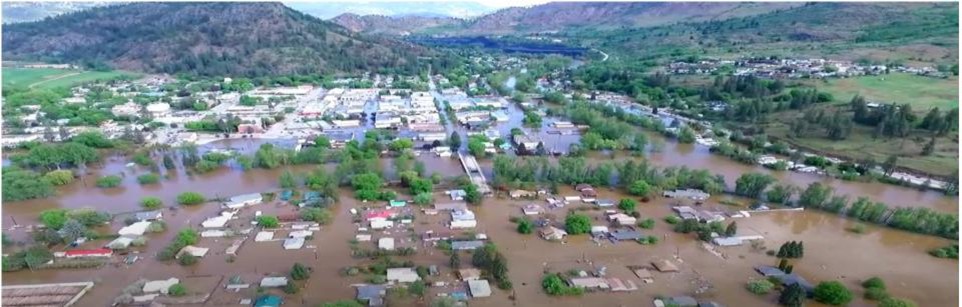
See Annex D for an example of how a DMAF investment contributed to mitigating the impact of flooding in the downtown of the city of Grand Forks BC.
DMAF’s socio-economic benefits also extended to job creation by supporting local economic activity through the implementation of the approved projects.
Applicants interviewed, particularly the Indigenous communities, stated that their proposed projects will contribute to improve environmental sustainability including the preservation of cultural heritage.
Additionally, they added that DMAF has helped to preserve livelihoods, such as fishing, and protect their cultural heritage sites including significant archeological sites that impact local
Sub Finding 4.2: While the DMAF program design included GBA+ principles, DMAF 1.0 focused primarily on community-level vulnerabilitiesFootnote 10. With DMAF 2.0, greater attention was put on providing equitable access to communities with limited capacity, such as Indigenous communities.
The Sendai Framework recommends that disaster risk reduction programs be empowering, inclusive, and accessible while paying special attention to the needs of the most vulnerable populations such as women, children, Indigenous populations including persons with disabilities and low socioeconomic status. This is important as disasters do not affect people living in the same communities equally. Therefore, disaster mitigation measures should target both communities and the people living there.
As already mentioned, efforts were made to ensure equitable access to low-capacity communities during DMAF 2.0 through the implementation of key strategies. Stakeholders indicated that these strategies also facilitated the integration of the unique perspectives of Indigenous populations while contributing to the government’s reconciliation efforts. These strategies included :
- Increased federal cost share from 75% to 100% for Indigenous communities’ related projects regardless of asset ownership leading to a 33% increase in the number of approved Indigenous projects.
- Ten percent (10%) minimum ($138 million) earmarked for Indigenous projects which was surpassed by 0.4% in DMAF 2.0
- Introduction of Small-scale projects stream for projects that cost between $1M and $20M, led to 153 small-scale project applications, accounting for 71.4% of the total applications received and the recommendation for final approval of 35 small-scale projects, representing 72.9% of all selected applications for approval under DMAF 2.0.
- Among other factors, the changes introduced between DMAF 1.0 and DMAF 2.0 resulted in a rise in applications from 182 to 214. Additionally, there was an increased representation of Indigenous as well as rural, smaller, and medium-sized communities in DMAF 2.0.
Under DMAF 2.0, there was a higher ratio of rural, small, and medium-sized communitiesFootnote 11 that received funding compared to DMAF 1.0.

-
Text description
Comparative Analysis of the Representation of Diverse Community Sizes in DMAF 1.0 vs. DMAF 2.0
Rural communities with populations under 1,000 accounted for 10% of DMAF 1.0-funded communities, increasing to 16% under DMAF 2.0.
Small communities with populations between 1,000 and 30,000 represented 40% of DMAF 1.0-funded communities, compared with 42% under DMAF 2.0.
Medium-sized communities with populations between 30,000 and 100,000 accounted for 13% under DMAF 1.0, rising to 16% under DMAF 2.0.
Large urban communities with populations over 100,000 represented 37% of DMAF 1.0-funded communities, decreasing to 27% under DMAF 2.0.
Sub finding 4.3: Since efforts made to address needs for diverse and Indigenous populations demonstrated positive impacts, there are opportunities for additional data-driven efforts to better respond to the needs of at-risk communities and their most vulnerable populations.
While DMAF made efforts to integrate the needs of low-capacity communities, there were challenges inherent to the program’s design and implementation that required additional efforts for improvements to enable the program to be better aligned with recommended global and national best practices to ensure people-centered and inclusive programming.
All interviewees mentioned that the application requirements were complex and burdensome (as stated in sub-finding 2.3) and provision was not made by the program to cover related costs. This created barriers for rural, small and Indigenous communities, who are limited by resources such as technical capacity to put the application together themselves and financial capacity to hire a consultant for support. In addition, the non-flexible funding eligibility categorizations hindered the participation of very remote communities, particularly First Nations’, with significantly limited internal capacity, both structural and technical, to implement large infrastructural projects.
With regard to challenges related to internal capacity, the evaluation found that communities with project feasibility studies ahead of the call for proposals were more successful in their application. This was noted by the program as a major factor external to the DMAF design that limited applicants from being successful since HICC does not have regular call for proposals. Calls for proposals are based on HICC’s readiness rather than focusing on the applicant’s readiness to apply. This lack of predictability is acknowledged by the program.
The following strategies were suggested for program improvement;
- Stakeholders interviewed suggested the need for HICC to consider increasing support for low-capacity and Indigenous communities. They added that this support could include the creation of a funding stream to facilitate acquiring capacity to help with the application process in addition to tailoring the cost-share requirement for lower capacity communities. This suggestion is in line with evidence provided by the program indicating increased success rates for project eligibility was seen among applicants that used program provided services: where time spent on calls, webinars or emails were positive factors. Additionally, this strategy was reported in the evaluation of the Smart Cities Canada program, as a success factor that facilitated inclusivity and accessibility.
- Additional support is also needed to effectively collaborate with entities that have responsibilities over some components of the DMAF program to help build a bridge around the technical, financial and structural gaps affecting the communities. This includes, but is not limited to, partnership with departments such as Indigenous Services Canada.
- To support applicants’ readiness-to-apply, it was suggested that a call-for-proposal predictability component be built into the program planning where a timeline for its release is included on the program’s website or relevant communication tools. An ongoing selection process was also mentioned as a potential solution.
Conclusion, recommendation and considerations
Conclusion
Overall, the evaluation concluded that DMAF has had a positive return on investment and is relevant to supporting Canada's efforts to mitigate and adapt to the impacts of disasters and climate change. However, for DMAF to continue to be effective and to reduce the long-term impacts of disasters in Canada, there is a need for ongoing coordination and alignment with other federal disaster management programs, and for specific measures to support at-risk communities.
Recommendation
Considering DMAF was launched eight years ago, in light of the evolving context with increased frequency and costs of disaster events in Canada, it is recommended that the Program Management:
- Review the DMAF Performance Measurement Strategy to ensure that expected intermediate and ultimate results remain relevant to assess progress and long-term program impacts, including economic benefits as infrastructure projects take time to complete.
- Ensure that selected indicators follow the SMART criteria and that relevant targets are identified. This will allow to track and to report on progress towards completion of funded projects.
Considerations
In addition to the recommendations, the evaluation team would like to highlight the following considerations :
- Ensure understanding and alignment with HICC's role in federal disaster mitigation and climate adaptation programming through discussions with other relevant
federal departments, and:
- Align with and ensure complementarity with other federal disaster management programs to identify areas of need "gaps" for better coordination of project funding for long-term resilience of Canadian communities.
- To support programming like DMAF to focus on proactive disaster mitigation investments and climate adaptation measures to help reduce response and recovery costs and to leverage the long-term economic benefits of disaster mitigation.
- In collaboration with relevant stakeholders:
- Explore additional mechanisms to enhance involvement of PTs for projects with regional impacts requiring collaboration among different communities for long-term resilience.
- Better understand the needs of low-capacity communities and vulnerable populations as disasters do not impact people equally.
Annex A: Logic Model and Performance Measurement Framework
In December 2017, HICC developed a Performance Information Profile (PIP) for the DMAF, which includes the Logic Model below. The logic model presents the program’s immediate, intermediate and long-term outcomes and related indicators used to assess progress towards expected results.
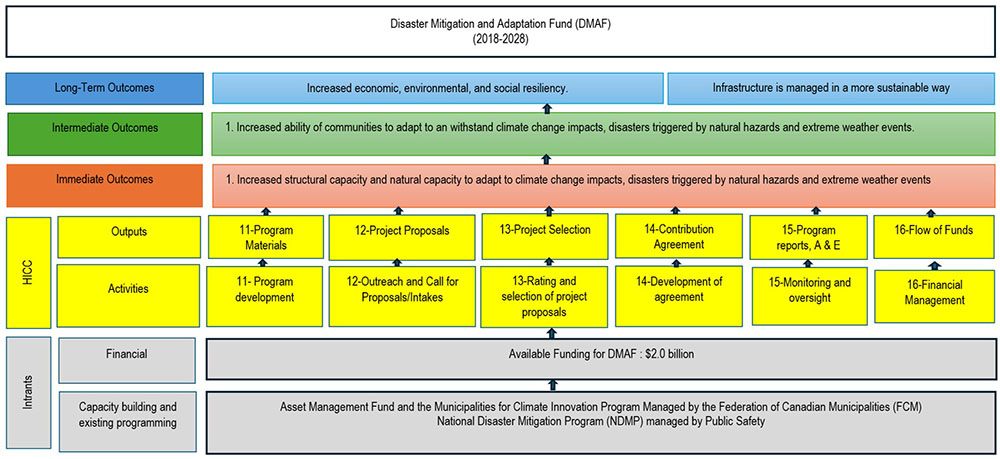
-
Text description
Disaster Mitigation and Adaptation Fund (DMAF) (2018-2028)
- Intrants
- Capacity building and existing programming:
- Asset Management Fund and the Municipalities for Climate Innovation Program Managed by the Federation of Canadian Municipalities (FCM)
- National Disaster Mitigation Program (NDMP) managed by Public Safety
- Financial
- Available Funding for DMAF : $2.0 billion
- Capacity building and existing programming:
- HICC
- Activities
- 11- Program development
- 12-Outreach and Call for Proposals/Intakes
- 13-Rating and selection of project proposals
- 14-Development of agreement
- 15-Monitoring and oversight
- 16-Financial Management
- Outputs
- 11-Program Materials
- 12-Project Proposals
- 13-Project Selection
- 14-Contribution Agreement
- 15-Program reports, A & E
- 16-Flow of Funds
- Activities
- Immediate Outcomes
- 1. Increased structural capacity and natural capacity to adapt to climate change impacts, disasters triggered by natural hazards and extreme weather events
- Intermediate Outcomes
- 1. Increased ability of communities to adapt to an withstand climate change impacts, disasters triggered by natural hazards and extreme weather events.
- Long-Term Outcomes
- Increased economic, environmental, and social resiliency.
- Infrastructure is managed in a more sustainable way
- Intrants
*Structural Infrastructure: Man-made facilities such as dams, dikes, and other structures.
**Natural Infrastructure: The use of naturally occurring resources or engineered use of natural resources to provide adaptation or mitigation services to the gradual and/or sudden impacts of climate change or natural hazards (e.g., using rain gardens to mitigate extreme precipitation and flooding or the use of shade trees to address heat waves and increasing temperatures).
Annex B: Evaluation Methodology and Limitations
The evaluation used the following lines of evidence:
- Document Review to examine key documents, including the TB Submission, Terms and Conditions, Performance Information Profile, contribution agreements, progress reports, the 2020 DMAF audit report and other relevant documents. These documents were reviewed to provide context and understanding of the DMAF and its activities over the last five years and to assess the program’s relevance, evolution, design and delivery as well as progress towards expected outcomes.
- Literature Review to examine academic literature to identify infrastructure funding gaps in disaster mitigation and adaptation. It also assessed the program's alignment with national and international disaster mitigation and adaptation strategies, such as the National Adaptation Strategy for Canada, Sendai Framework and other federal disaster mitigation programs to identify overlaps, and complementarity.
- Data review to gather evidence on the DMAF’s progress towards achieving its outcomes and its contribution to diverse populations. This included program data, progress reports, Funding Reports, and data from Statcan.
- Case Study to examine 25 projects submitted to the DMAF since its inception, encompassing both recipient and non-recipient applications, with a dedicated focus on Indigenous-led projects. The case studies gathered evidence on how the selection and implementation of the projects aligned with the program's terms and conditions and the achievement of program objectives. Key informant interviews included 17 program recipients, 3 Indigenous recipients, and 4 representatives from non-recipient projects.
- Interviews to gather perspectives on the responsiveness of the DMAF, its progress towards expected outcomes, and the effectiveness of its design and delivery. As presented in the table, participants included HICC program management and staff from the DMAF and other related internal programs, provincial and territorial officials, and officials from other government departments. Additional interviews with funding recipients and non-recipient applicants were conducted under case-studies.
| Approach | Interviewees/Stakeholder Groups |
# of Participants |
|---|---|---|
| Interview led by Evaluation team | DMAF Program Management and Staffs |
8 |
| Provincial and Territorial Officials | 11 | |
| HICC Staff | 2 | |
| Representatives from Other Government Departments | 7 | |
| Case Study Interview- conducted by consultant | Funding Recipients (Indigenous) | 3 |
| Funding Recipients (Non- Indigenous) | 14 | |
| Non-recipient applicants (Non-Indigenous) | 4 | |
| Total | 49 | |
Limitations
- Due to feasibility considerations, the evaluation selected 20 funding recipients and five non-recipients for the case study ensuring representation across geographical regions, intake cycles, project size, recipient type and hazard types. Projects from the selected provinces were stratified by the selection criteria and those that received the highest funding were selected. This limitation had minimal or no impact on the evaluation project.
- Despite best efforts to engage all selected projects, the evaluation was unable to elicit the perspective of Indigenous non-recipients as selected applicants refrained from participating in the interviews. However, this limitation had minimal impact on the overall project as the evaluation successfully gathered relevant and consistent input from other stakeholders and complemented these insights with document and literature reviews to ensure a comprehensive assessment.
Annex C: DMAF project distribution across Canada, selection criteria and success rates by stages
| Province | DMAF 1.0 | DMAF 2.0 | Total |
|---|---|---|---|
| Alberta | 5 | 2 | 7 |
| British Columbia | 7 | 10 | 17 |
| Manitoba | 2 | 1 | 3 |
| New Brunswick | 3 | 4 | 7 |
| Newfoundland and Labrador | 1 | 0 | 1 |
| Nova Scotia | 2 | 3 | 5 |
| Northwest Territories | 3 | 3 | 6 |
| Nunavut | 0 | 1 | 1 |
| Ontario | 30 | 12 | 42 |
| Quebec | 11 | 7 | 18 |
| Saskatchewan | 5 | 2 | 7 |
| Total | 69 | 45 | 114 |
Selection criteria and success rate at different steps of the selection process for DMAF 2.0
Eligibility Criteria
- Organization Eligibility
- Project Eligibility
- Project Dates
- Solely land Acquisition
- Total Eligible Cost
- Federal Cost Share
Merit Criteria
- Return on Investment
- Hazard Risk
- Resilience
- Project Rationale
- Innovation
- Risk Transfer
- Strategic Alignment
- Project Co-Benefits
Risk CriteriaFootnote 12
- Resource Capacity
- Financial Capacity
- Administrative Capacity
- Political, Economic and Environmental Context
- Public Perception
- Environmental Assessment and Duty to Consult

-
Text description
This figure illustrates the success rate of applications at each step of the DMAF 2.0 process. A total of 214 applications were received. Of these, 58% (125 applications) met the eligibility criteria and advanced to the next step. Among those 125 applications, 22% (48 applications) met the merit and risk criteria and were ultimately submitted for minister’s approval.
Annex D: Case Study demonstrating the benefits and impacts of DMAF investments
Case Study: Impact of DMAF investment protecting the City of Grand Forks, British Columbia’s downtown core from flooding
The project with Grand Forks is ongoing and includes multiple components, one of which is the protection of the downtown area against flooding. The two figures illustrate how this component of the project helped the community avoid damages from flooding in 2023.

Annex E: Management’s response and Action Plan
| Recommendations | Management’s |
Actions Planned |
Timelines |
|---|---|---|---|
Considering DMAF was launched eight years ago, in light of the evolving context with increased frequency and costs of disaster events in Canada, it is recommended that the Program Management:
|
Accepted | The DMAF Performance Measurement Strategy will be updated and will include relevant and realistic targets using SMART indicators. | June 2026 |
Page details
- Date modified: