
Audit of Housing, Infrastructure and Communities Canada’s (HICC) procurement practices
-
Copyright
© His Majesty the King in Right of Canada, as represented by the Minister of Housing, Infrastructure and Communities, 2025.
T94-99/2025E-PDF
ISBN 978-0-660-79120-3

Audit of Housing, Infrastructure and
Communities Canada’s (HICC) procurement practices
(PDF Version)
Table of contents
- Executive summary
- Introduction
- Engagement objectives, scope, & criteria
- Key findings and recommendations
- Annex A – Detailed findings
- Annex B – Management action plans
- Annex C – Methodology and limitations
Executive summary
Key findings
- General compliance with requirements: Contract files generally contained sufficient documentation to demonstrate compliance with the applicable requirements.
- Strategic planning in procurement: As HICC matures as a department, there is a need for strategic planning in procurement to enhance the department’s ability to respond to evolving expectations.
- Training and guidance materials: Given the evolving role of the business owner in procurement, there is a need for increased training and guidance support.
Conclusion and recommendations
HICC’s procurement processes were generally compliant with the TB Directive on the Management of Procurement, the TB Contracting Policy,and other Government of Canada regulations, in place at the time the transactions occurred.
Opportunities exist to:
- strengthen information management and quality assurance practices,
- implement strategic planning for procurement, and
- to ensure training and guidance material is kept up to date and readily available, to support fair, open, and transparent procurement.
Statement of conformance
In my professional judgement as Chief Audit and Evaluation Executive, the audit conforms with the Institute of Internal Auditors’ Global Internal Audit Standards and the Government of Canada’s Policy on Internal Audit, as supported by the results of the Quality Assurance and Improvement Program.
Nicole Zywicki, CPA, CFE
Chief Audit and Evaluation Executive
May 2025
Introduction
Procurement within the Government of Canada is governed via a suite of legislation, policies, regulations and directives established by central agencies. In particular, the Treasury Board (TB) Directive on the Management of Procurement establishes various objectives for the management of procurement and establishes requirements in various areas including roles and responsibilities, procurement process life cycle management, documentation retention, and reporting. Its objective is that procurement of goods, services and construction obtains the necessary assets and services that support the delivery of programs and services to Canadians, while ensuring best value to the Crown. Procurement is also used to advance other objectives, such as increasing economic opportunities for First Nations, Inuit, and Métis businesses, and the advancement of environmental objectives.
There are also various related policy and guidance instruments that define requirements in areas such as delegation of authorities, security, and values and ethics.
The TB Directive on the Management of Procurement has experienced some changes in recent years.
- May 2021: the former TB Contracting Policy was replaced by the Directive on the Management of Procurement. At the time of this change, the requirements of the two were very similar.
- April 2022: the mandatory procedures for contracts awarded to Indigenous business were introduced as a way to increase economic opportunities for these businesses through the federal procurement process. The roll out of this requirement was done in a three-phase approach. HICC, known as Infrastructure Canada at the time, was one of 32 organizations selected to be a part of the first phase, which meant the 5% Indigenous procurement target was to be met or exceeded by fiscal year 2022-23.
- September 2024: this update to the directive introduced the mandatory procedure for business owners when procuring professional services. These procedures strengthened accountabilities for business owners by formalizing and providing more details on their responsibilities during the procurement process, in particular the planning and contract monitoring phases. A business owner, formerly referred to as the “Project Authority”, is defined in the TB Policy on the Planning and Management of Investments as the “individual who is responsible for the business or program area for which the project, procurement or programme is established.”
In March 2025, the Comptroller General of Canada published its audit on the governance, decision-making and controls for professional services contracts. Findings in this audit report are generally consistent with what was observed in other departments by the Comptroller General.
Procurement services at HICC
Figure 1. Full-time equivalents (FTE) at HICC
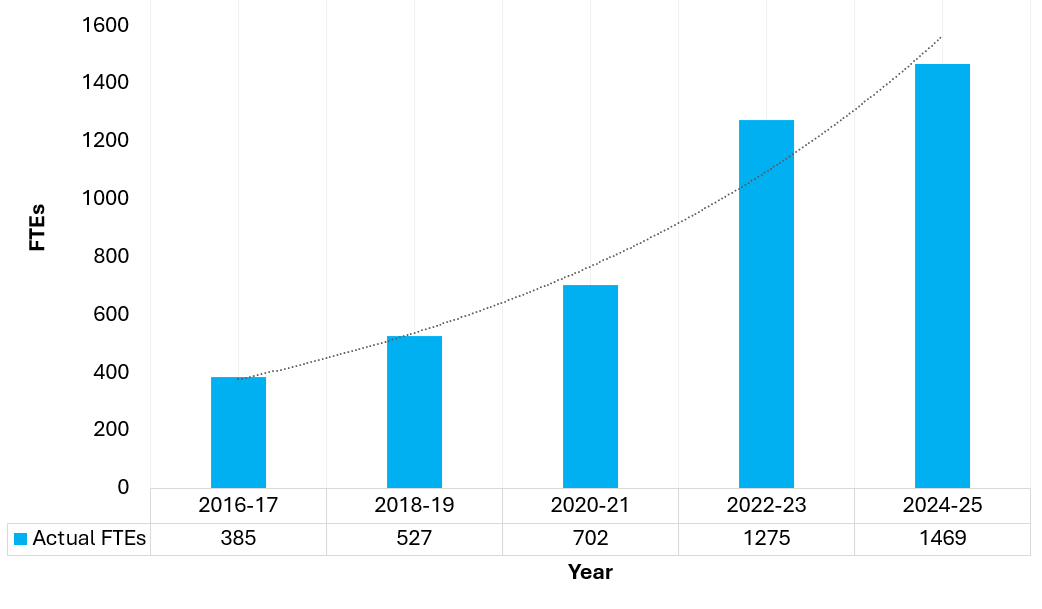
Figure 1 - Text version
Bar chart titled 'Full-time equivalents (FTE) at HICC' showing actual FTE counts across five fiscal years. The vertical axis ranges from 0 to 1800 FTEs. The horizontal axis lists fiscal years: 2016–17, 2018–19, 2020–21, 2022–23, and 2024–25. Corresponding FTE values are: 385, 527, 702, 1275, and 1469 respectively. A dotted trend line overlays the bars, indicating a steady projected increase in FTEs over time.
Housing, Infrastructure and Communities Canada (HICC) has seen a rapid expansion in recent years, notably through an expansion in the department’s mandate, which now includes responsibility for housing and homelessness. This has resulted in HICC’s FTEs to increase from 385 FTEs in 2016-17 to ~1450 planned FTEs at the end of 2024-25.Footnote 1
While the department has grown, Procurement Services has not. Nevertheless, even with their limited capacity, there is demonstrated progress in improving procurement processes.
A 2017 internal audit of HICC’s procurement concluded that that procurement and contracting processes did not demonstrate the controls required to ensure compliance with relevant policies, guidelines, and legislative requirements. Since that audit, Procurement Services has made great strides towards ensuring that HICC’s procurement processes are compliant with requirements.
Within HICC, functional leadership and oversight of procurement rests with Procurement Services, which is part of the Finance and Administration division of the Corporate Services Branch. This team’s mandate is to support the effective and efficient delivery of procurement and contracting activities, and ensure that HICC’s procurement practices meet applicable requirements. Procurement Services is responsible for a number of functions which includes developing, communicating and interpreting procurement governance frameworks and instruments (such as the Procurement Review Committee, and internal policies); supporting service delivery through the standardization of templates and of job aids; monitoring and reporting on the department’s procurement processes; and training business owners.
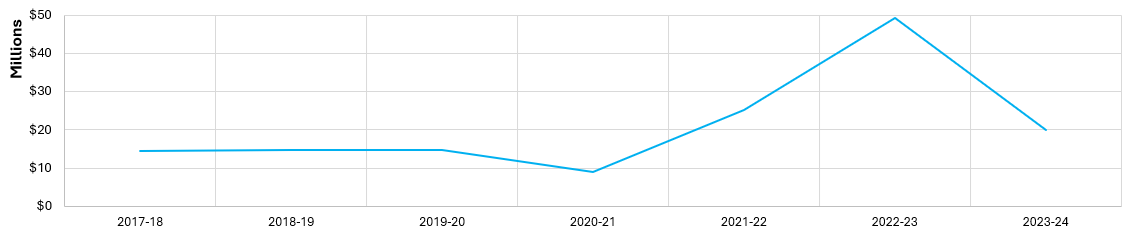
Procurement Services manages an annual portfolio of approximately 150 procurement contracts a year, which from 2017 to 2023, had an average total contract award value of $20 million annually. Contracts for Service make up the vast majority of the work, accounting for 87% of the contracts issued since 2017.
Contract award values are the maximum value to be paid over the life of a contract, some of which may span multiple years. Once awarded, contracts may be amended for multiple reasons, including increasing or decreasing the contract value and/or the length of the contract. All contracts greater than $10,000 are proactively disclosed on the Open Government Portal, quarterly.
Figure 2. Contract award values (including amendments), by fiscal year
-
Figure 2 - Text version
Line graph titled 'Contract Award Values (including Amendments), By Fiscal Year' showing values in millions of dollars from 2017–18 to 2023–24. The vertical axis ranges from $0 to $50 million. The horizontal axis lists fiscal years. Contract award values were stable around $20 million from 2017–18 to 2019–20, dipped slightly in 2020–21, then rose sharply to a peak of approximately $45 million in 2022–23, before dropping back to around $20 million in 2023–24.
Engagement objectives, scope, & criteria
Objective
The objective of this engagement was to provide an assessment of HICC’s overall compliance with the requirements of TB Contracting Policy (rescinded 2021) and the superseding Directive on the Management of Procurement, as applicable, including the documentary expectations when using different procurement mechanisms.
CriteriaFootnote 2
In support of the audit objective, the following criteria were developed:
- Procurements were conducted in a fair, open and transparent manner, consistent with the Treasury Board Policy/Directive in place at that time, and with internal control frameworks.
- Procurements were conducted in a manner consistent with the organization’s internal processes.
Scope/Limitations
The audit included procurement activities performed between April 2017 and March 2024.
Scope limitation: This audit did not examine procurement activities related to the Samuel de Champlain Bridge Corridor Project, which was subject to previous audits.
Key findings and recommendations
1. General compliance with requirements
Finding
Contract files generally contained sufficient documentation to demonstrate compliance with the applicable requirements.
Opportunities exist to strengthen quality control practices to ensure that each procurement file is consistent and complete.
Why is it important?
Failure to consistently maintain procurement files may lead to HICC being unable to substantiate compliance with requirements.
Recommendation
Procurement Services should further strengthen information management, by establishing a quality control regime to ensure that all requirements are consistently substantiated within a complete procurement file.
2. Strategic planning in procurement
Finding
As HICC matures as a department, there is a need for strategic planning in procurement to enhance the department’s ability to respond to evolving expectations.
Why is it important?
Strategic planning in procurement, that reflects current and anticipated future demand, provides business owners with a mechanism to communicate their needs in a timely manner, leverages existing information to inform decision making, and would improve HICC’s ability to respond to the evolving needs of the department in a way that is efficient, cost effective, and mitigates procurement related risks.
Ongoing monitoring is critical to ensure that actual results align with what was expected, and any changes are made in a timely manner, as needed.
Recommendation
Procurement Services should integrate into its procurement management framework:
- the need for business owners to be accountable for timely identification of their known, and potential, procurement needs; and
- a strategic procurement planning process (which may be integrated, or coordinated, with other departmental planning processes).
Procurement Services should dedicate resources to enhance their internal capabilities for reporting, including ensuring data quality.
3. Training and guidance materials
Finding
Given the evolving role of the business owner in procurement, there is a need for increased training and guidance supports.
Why is it important?
Guidance documents that are not readily available, or kept up-to-date, can result in the inconsistent application of processes and may lead to non-compliance.
Recommendation
Procurement services should:
- Review the various elements of its procurement management framework, such procedures, templates, and job aids, to ensure that they are up-to-date and reflect evolving requirements.
- Review internally developed training and guidance material to ensure it remains up-to-date and is readily available to all who may need it, including individuals that that are supporting, or acting on behalf of, a business owner.
Annex A – Detailed findings
Key finding #1 – General compliance with relevant requirements
Contract files generally contained sufficient documentation to demonstrate compliance with the applicable requirements. Furthermore, opportunities exist to strengthen quality control practices to ensure that each procurement file is consistent and complete.
Context
The Government of Canada conducts its procurement activities according to a framework made up of a variety the policies, directives, and regulations. These instruments establish varying mandatory requirements for the different types of procurement that can be used when procuring goods or services. To assess HICC’s compliance, a sample of procurement contract files was reviewed to verify the controls.
The Financial Administration Act (FAA) serves as a framework for financial management. Its primary objective is to ensure that the public funds are managed responsibly and efficiently.
Authority is delegated to personnel through the Delegation of Financial Signing Authorities instrument, which articulates any restrictions (such as financial limits, or limits on the nature of procurement) by position. Each authorized signing officer has a specimen signature card that links that individual to a position on the delegation instrument and may also include additional restrictions.
Contracting (transaction) authority
Transaction authority (FAA Section 41) is the authority, delegated by the Minister, for the purpose of allowing authorized personnel to sign contracts, and to sign off on legal entitlements on behalf of the Department. The audit found all procurement files were authorized in a timely manner, by an individual with the requisite authority.
Security clearance
The TB Directive on the Management of Procurement states that a department’s procurement management framework is to facilitate compliance with all legal obligations, including those relating to security. The Directive on Security Management requires that confirmation of security requirements is done before awarding a contract. The audit assessed procurement files, and in all cases where it was required, evidence was on file to demonstrate compliance.
Quality control
Figure 3. Average % of gaps in procurement files has been trending down

Figure 3 - Text version
Line graph showing average percentage of gaps in procurement files from fiscal years 2017–18 to 2023–24. The vertical axis categorizes gap percentages into four ranges: over 25%, 15–25%, 5–15%, and 5% or less. The horizontal axis lists fiscal years. A red dashed vertical line marks the implementation of the '2017 MAPs' between 2018–19 and 2019–20. The graph shows a notable decline in gap percentages following this implementation, with a consistent downward trend through 2023–24.
While controls are in place for key areas such as technical authorities (Section 41 of the FAA) and security clearance requirements, opportunities exist to further improve quality controls concerning the completeness of other elements in procurement files. The TB Directive on the Management of Procurement states that departments are required to ensure that accurate and comprehensive procurement records are created and maintained.
To aid in the maintenance of complete files, Procurement Services has developed and uses a Procurement Checklist. This valuable tool lists all of the potential documents/evidence that can be included in a procurement file. When a Procurement Officer is working on a file, they use this checklist to assist in making sure any required documents are saved, based on the type of procurement process used. This tool also allows for the officers to keep track of and confirm which documents are already in the file. While this checklist is meant to help the completeness of files, reviews of the individual checklists within procurement files showed that not all Procurement Officers were using the tool in a consistent manner. This inconsistency reduces the effectiveness and can lead to gaps in the completeness of the procurement file.
For the purpose of this audit, gaps were defined as any instance of incomplete or missing documentation found in the sampled files, regardless of the nature of the gap (e.g., administrative errors, or an item marked draft without evidence of being finalized). While the audit found gaps, they were not systemic in nature. Enhancing the level of quality control of contract files would strengthen HICC’s ability to consistency demonstrate compliance.
This finding is consistent with Office of the Comptroller General’s Horizontal Internal Audit of Procurement Governance, which found departments in that audit had opportunities “to better define the scope and methods of quality control functions and ensure they work as intended”.
The previous internal audit, conducted in 2017, resulted in recommendations to develop controls and processes to ensure compliance with relevant policies, guidelines, and legislative requirements. The associated management action plans (MAP) were fully implemented by the end of 2018. Testing in this audit demonstrated a significant improvement in procurement file completeness since the previous audit’s recommendations were closed. This indicates that the department has been making positive changes to their processes to improve the completeness of their procurement contract files.
Impact (i.e. what could happen if the finding is not addressed)
While controls associated with transaction authority and security have been implemented and working as intended, opportunities exist to strengthen quality control practices to ensure that all required documents are consistently saved within each procurement file. Failure to consistently maintain procurement files may lead to HICC being unable to substantiate compliance with requirements.
Recommendation
Procurement Services should further strengthen information management, by establishing a quality control regime to ensure that all requirements are consistently substantiated within a complete procurement file.
Key finding #2 – Strategic planning in procurement
As HICC matures as a department, there is a need for strategic planning in procurement to enhance the department’s ability to respond to evolving expectations.
Context
Procurement is a complex area governed by a variety of acts, regulations, and policies that determine how procurement activities must be carried out. In addition to the provision of goods and services at the best value to the Crown, procurement within the Government of Canada is also used to advance other objectives, such as increasing economic opportunities for First Nations, Inuit, and Métis businesses, and the advancement of environmental objectives (through factoring indirect environmental considerations into the procurement process).
Procurement Services plays a key role to support the department in balancing competing procurement objectives, supporting business owners through the procurement cycle, and to ensure compliance in an increasingly complex environment, where new supply chain risks are emerging.
Current state
The department’s planning and reporting processes to support procurement are not sufficient to effectively monitor the evolving procurement space. Procurement Services is forced to be reactive, as they are often not engaged until well after a business owner identifies a need to procure a service or good.
What is strategic procurement planning?
Strategic planning in procurement would develop a plan based on HICC’s need to acquire goods and services. Beyond merely listing procurement activity, it would focus on analyzing current procurement practices, predicting future needs, and creating strategies to optimize processes, reduce costs, and better manage risks.
Historical analysis
Through the analysis of historical trends, it can be possible to predict what goods and services are likely to be needed in the future. For example, between 2017 to 2023, roughly 70% of HICC’s procurement was within five spending categories. While the dollar values may fluctuate year to year, by analyzing the overall trends in past procurement activity, Procurement Services can be better prepared to work with business owners and ensure the department has appropriate procurement strategies that reflect needs and expectations.
Equipped with the details of past procurement activity, Procurement Services would be better positioned to hold fulsome consultations with business owners, to deepen procurement service’s understanding of anticipated needs and priorities, and work with business owners to coordinate and align individual procurement activity within the broader needs of the department.
With an understanding of both the individual business owner and the department’s overall needs and priorities, Procurement Services can establish a plan that incorporates targets, milestones, and sourcing strategies. While it is recognized that business owners may encounter unforeseen procurement needs, in most cases the potential need to procure is known well in advance of Procurement Services being consulted.
Figure 4. Top five categories of total procurement awards (in millions) (2017-23)

-
Figure 4 - Text version
Horizontal bar graph titled 'Top Five Categories of Total Procurement Awards (in millions) (2017–23)' showing total award amounts for five procurement categories. The x-axis ranges from $0.00 to $70.00 million. The y-axis lists categories: Information Technology Consulting Services, Engineering Consulting Services, Management Consulting Services, Training and Educational Services, and Computer Equipment. Information Technology Consulting Services has the highest award value, followed by Engineering, Management, Training, and Computer Equipment respectively.
Monitoring
Prior to the significant growth HICC experienced in recent years, the volume and complexity of procurement was such that Procurement Services was able to monitor without the need for formalized or sophisticated reporting tools. However, HICC is now a much larger and more complex organization with evolving procurement needs. There is an opportunity to leverage available tools, and work to identify the need to supplement any missing capabilities. At the time of the audit, Procurement Services, collectively, did not have the expertise needed to effectively use or enhance the available tools to meet evolving needs.
Data quality
The quality of the data directly impacts the effectiveness of monitoring. The audit included a data validation exercise which revealed opportunities to better leverage existing data sources to validate information used for decision making.
For example, it was found that the Indigenous status of some firms was misclassified. Indigenous Services Canadian provides a list of Indigenous businesses, and the Canadian Council for Aboriginal Business’ directory of Indigenous businesses are examples of available information that could be used for validating the Indigenous status of firms. This lack of data validation resulted in the net under reporting of $489,000 for contracts awarded to indigenous firms in the 2022-23 fiscal year.
Impact
Strategic planning in procurement, that reflects current and anticipated future demand, provides business owners with a mechanism to communicate their needs in a timely manner, leverages existing information to inform decision making, and would improve HICC’s ability to respond to the evolving needs of the department in a way that is efficient, cost effective, and mitigates procurement related risks.
Ongoing monitoring is critical to ensure that actual results align with what was expected, and any changes are made in a timely manner, as needed.
Recommendations
Procurement Services should:
- integrate into its procurement management framework:
- the need for business owners to be accountable for timely identification of their known, and potential, procurement needs; and
- a strategic procurement planning process (which may be integrated, or coordinated, with other departmental planning processes).
- dedicate resources to enhance their internal capabilities for reporting, including ensuring data quality.
Key finding #3 – Training and guidance materials
Given the evolving role of the business owner in procurement, there is a need for increased training and guidance supports.
Context
Training and guidance for business owners
Figure 5. Percentage of business owners that felt they would benefit from more training on the procurement processes
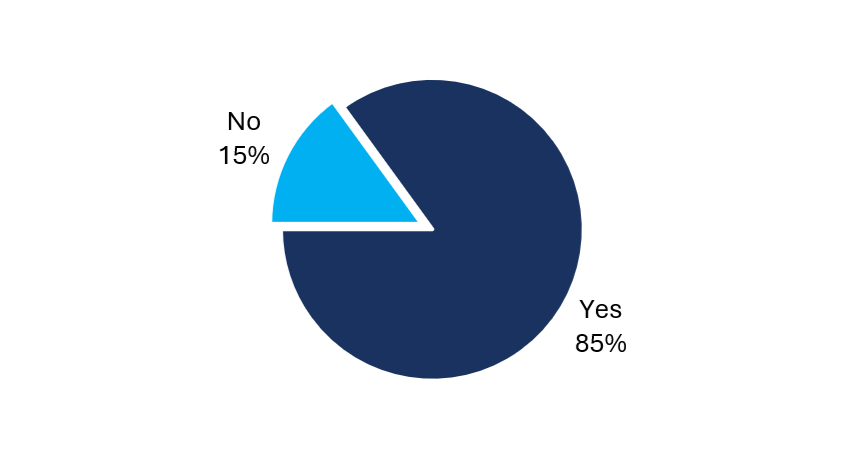
Figure 5 - Text version
Pie chart showing responses from business owners on whether they would benefit from more training on procurement processes. The chart is divided into two segments: 'Yes' at 85% and 'No' at 15%, indicating a strong majority in favor of additional training.
A survey was sent out to the business owners to solicit their thoughts on whether the training and guidance material received was sufficient to meet their needs. 31 business owners were invited to complete the survey, and 13 responded.
The majority of respondents felt they would benefit from more HICC-specific training on the procurement process. This was further supported through interviews with Procurement Officers who noted that there was a knowledge gap among business owners when it comes to their roles and responsibilities during the different phases of the procurement process. An opportunity exists to develop or streamline guidance and training to clarify roles and responsibilities, and help business owners meet their new obligations.
Training and guidance for procurement officers
Interviews indicated that Procurements Officers felt that the training for their role was sufficient to meet their day-to-day responsibilities. They noted a variety of training sources including Canada School of Public Services trainings, and on-the-job training provided by the Procurement Manager.
Procurements Officers also made reference to readily available internally developed guidance materials, such as procedures, templates, and job aids. However, the audit found the content of some document has become out-of-date, notably following recent changes to the TB Directive on the Management of Procurement. The updated directive states that departments are to establish, and maintain, a procurement management framework. As requirements are evolving, it is important to ensure that supporting documents also remain up-to-date.
Impact
Guidance documents that are not readily available, or kept up-to-date, can result in the inconsistent application of processes and may lead to non-compliance.
Recommendation
Procurement Services should:
- Review the various elements of the procurement management framework, such procedures, templates, and job aids, to ensure that they are up-to-date and reflect evolving requirements.
- Review internally developed training material to ensure it remains up-to-date and is readily available to all who may need it.
Annex B – Management action plans
| Recommendation | Management response and action plan | Key deliverables | OPI and due date |
|---|---|---|---|
| Procurement Services should further strengthen information management, by establishing a quality control regime to ensure that all requirements are consistently substantiated within a complete procurement file. | Less than 5% of files were found to be missing documentation in 2024-25, and trends have been steadily decreasing for the last 5 years. The procurement team will continue to build on the peer-to-peer review process, where procurement officers review each other’s files before section 42. |
|
Procurement, July 1, 2025 |
Procurement Services should integrate into its procurement management framework:
|
The framework updates proposed for 2025-26 include adding responsibilities for business owners set forth in the Directive on the Management of Procurement Appendix F: Responsibilities of the Business Owner, the TBS Managers Guide for Professional Services Procurement. The updated framework also establishes a procurement planning cycle through the integrated business planning cycle. |
|
Procurement, July 1, 2025 |
| Procurement Services should dedicate resources to enhance their internal capabilities for reporting, including ensuring data quality. | The Procurement team is adding 2 indeterminate FTE positions that include reporting, ensuring quality in our data, and better integration into broader Finance. |
|
Procurement, August 1, 2025 (AS-05 staffed as of April 1, 2025) |
Procurement Services should:
|
Continue to staff open PG-02s, which will alleviate the operational workload which currently takes precedence. The Procurement team will expand the role of one of its senior procurement officers to have a focus on continuously improving client facing documentation, provide regular coaching and training sessions. |
|
Procurement, September 30, 2025 |
Annex C – Methodology and Limitations
In accordance with HICC’s 2024-2029 Integrated Audit and Evaluation Plan, the Audit and Evaluation Branch undertook the Audit of HICC’s Procurement Practices.
Risk assessment
A risk-based approach was used to establish the objectives, scope, and approach for this assurance engagement. The same was used to provide timely assurance of the effectiveness of selected core controls. Considering these risks, audit criteria were developed to guide the audit field work and form the basis for the overall engagement’s conclusion.
Document review, interviews and walkthrough
The engagement included various tests, as considered necessary, to provide reasonable assurance on the overall engagement conclusion. These tests included, but were not limited to, interviews, walkthroughs, a review and analysis of applicable policies, directives, guidelines, as well as other supporting documentation and audit procedures. All project files were reviewed as part of the testing procedures.
The field work was substantially completed in October 2024.
The engagement findings were communicated to the office of primary interest/auditee to validate facts and to confirm the clarity, accuracy, and completeness of the information reported.
Sampling methodology
A judgemental sample of 35 procurement contracts was selected from a population of 282. Of the 35 sampled, 22 were contracts awarded through a competitive process, while the remaining 13 were awarded through a non-competitive process.
Regarding the survey sent out to business owners, 33 key business owners (or staff that were involved on behalf of the business owner) were identified from the 35 sampled procurement contracts.
Scope and limitations
This audit included HICC’s procurement activities performed between April 2017 and March 2024. This engagement did not examine procurement activities related to the Samuel de Champlain Bridge Corridor Project.
Page details
- Date modified: